.png)

Two years ago, I launched Shaper to build companies that solve for data fragmentation in a wide range of industries.
It’s been a fast start and fun adventure so far, as the six companies we’re building (Arbital, Protege, Fractional, Zenith, Adelphi, and Catena) have all gained incredible traction rapidly. It’s hard to imagine what we’ll accomplish in the next two years, and even harder to imagine the next twenty!
A year ago, I laid out a few lessons from the first year running Shaper, and comparisons to my experiences leading Datavant and LiveRamp. As a follow-up, this post walks through four key takeaways from our second year.
Press enter or click to view image in full size
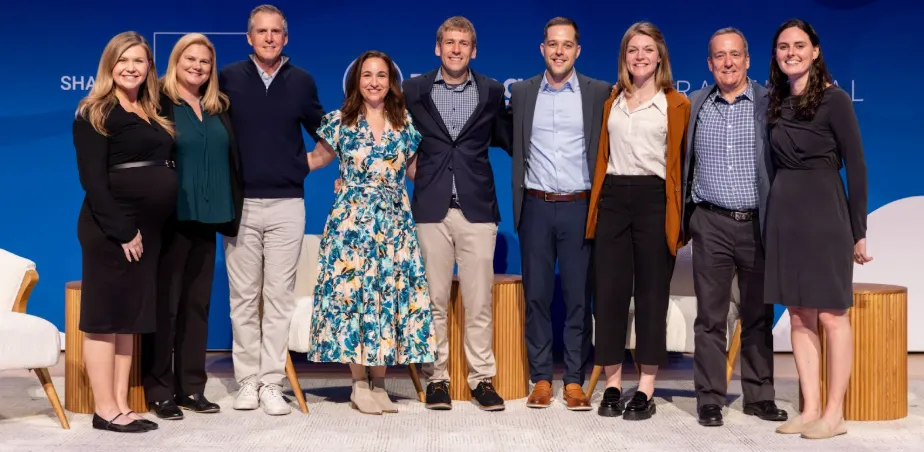
This shouldn’t have surprised me: every time I’ve led a company scaling extremely quickly, talent has become the bottleneck. I see it as the biggest challenge and biggest opportunity across the portfolio: recruiting world-class engineers, building out an incredible exec team, and attracting incredible generalists.
Recruiting is a long-game, and requires asking for lots of referrals, building long-term relationships, and aspiring to match the perfect person to the perfect role at the perfect company at the right moment in their life. It also requires each Shaper company to have a team that is equally obsessive about talent density, building strong cultures and pouncing on talent opportunistically.
Over the last year, we’ve experimented with a number of hacks to be able to hire more effectively across the portfolio. For example, we’ve hired at the Shaper level, with the intention of superstars rotating into (and ultimately joining) portfolio companies as they find the perfect fit. I tried to introduce this idea with a single “Special Projects” hire ~9 months ago, and we found so much incredible talent that I ended up “accidentally” hiring three people instead, and we’ve since expanded the program into a generalized “Builder-in-Residence” program. This has become a pipeline of great talent for the portfolio and I think is one of the biggest areas we’re adding value. Similarly, we’re building out “CFO-in-Residence” programs to build a pipeline of up-and-coming CFOs who can support the portfolio fractionally to start and grow into Head of Finance roles as they match within the portfolio.
Meanwhile, we’ve rushed to make recruiting a core competency — adding a talent leader at Shaper as an early hire. And everyone on the Shaper team spends a huge percentage of time talking to potential candidates. We’re obsessing over talent density, and it’s been a big investment so far, but I believe it’s already paying off.
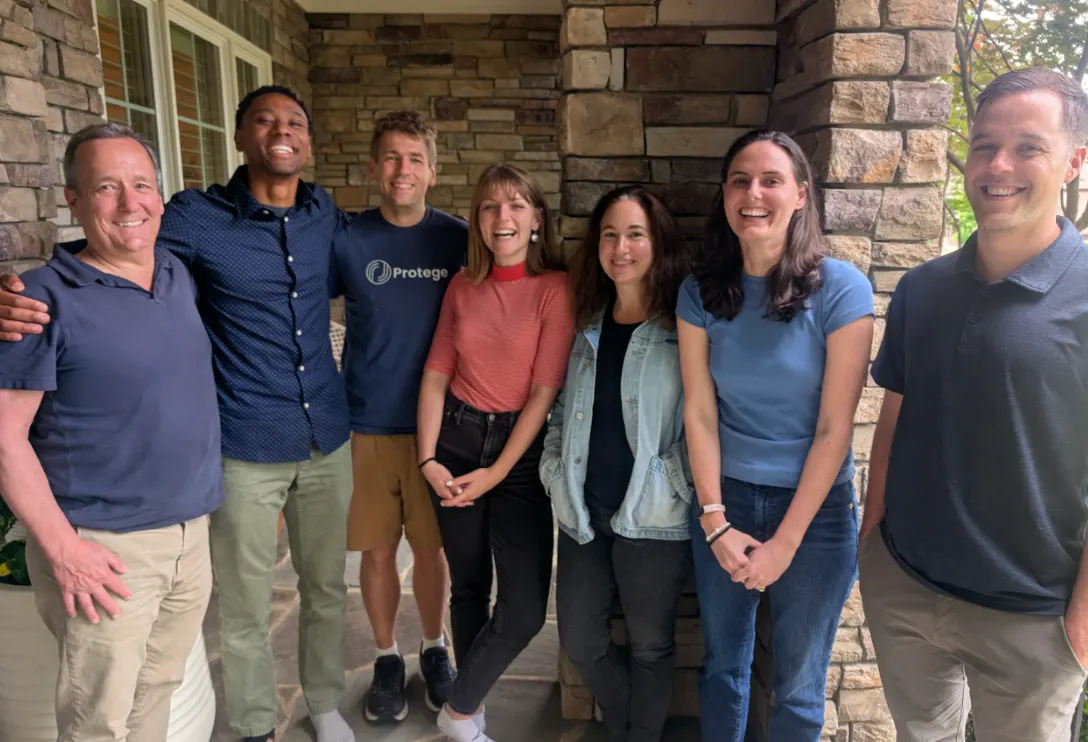
This year, we did not launch any new companies, instead choosing to double down on the six we launched in our first year. This required discipline, and I think was the right choice given the momentum of the current portfolio.
Even though many people put us broadly in that category, I am generally a skeptic of the “venture studio” business model. The main issue is CEO adverse selection (why would a great CEO accept the equity dilution?); my approach to avoid the adverse selection is by staying in my lane and focusing on businesses where I’m a natural cofounder (i.e. businesses where I believe I can materially change the odds, size, and speed of success) and also by ensuring I can meaningfully be involved in each business. To that end, a small portfolio of exceptional businesses where I meaningfully invest time is dramatically more valuable than a large portfolio.

The biggest commonality in the most successful companies I’ve seen is simply the speed they move. The pace that they reply to emails, follow-up with clients, return redlines, drive interview processes, make decisions, launch products, and drive execution always surprises me, and is in sharp contrast to “average” companies. This could be correlation (Hungrier teams? Higher throughput talent?), but I expect it’s at least partly causal, for two reasons:
One metric that astounds me: Two companies in the Shaper portfolio each crossed $10 mm. run-rate within 15 months of incorporation. For comparison: LiveRamp took six years from incorporation to $10 mm ARR, and Datavant took ~3 years from launch to $10 mm ARR. The opportunities surrounding AI are unlocking faster growth than ever as the biggest economic shift of a generation takes place.
And beyond revenue, we’re seeing a number of other milestones happen at unprecedented paces. One Shaper company signed an 8-figure TCV deal in its first year of existence (with a 4-week sales cycle!). Another company did a 10x, 7-figure land-and-expand upsell within 3 months of landing an initial deal. The velocity and magnitude of opportunity that exists in this moment is simply unprecedented in my career, and again favors companies with incredible talent density and company velocity to capitalize on it.
***
Overall — what an amazing first two years we’ve had so far, and I’m even more excited for the year ahead!