
.png)
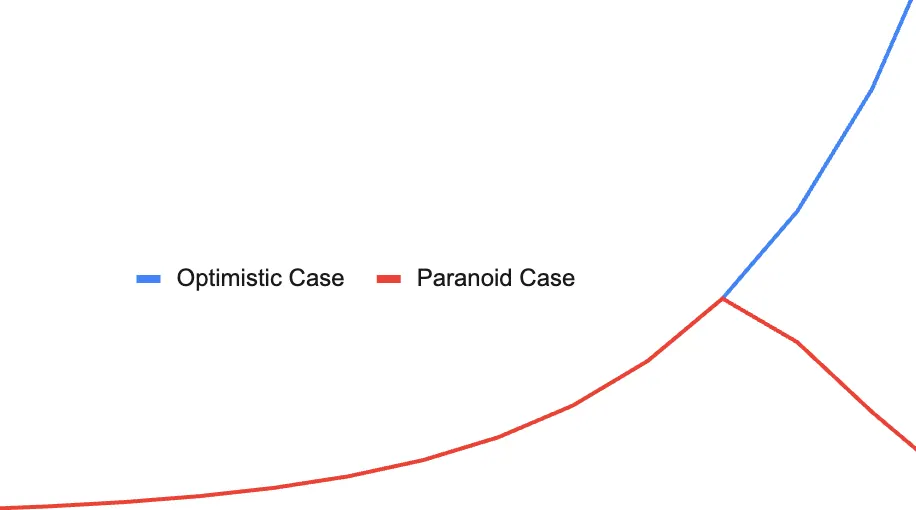
One of the traits that I think exists in the best CEOs is the ability to simultaneously be extremely optimistic and extremely paranoid, and to be able to appropriately harness each of those emotions to rally the team.
Both emotions are extremely valuable. If you don’t have optimism within the team, it’s impossible to go after ambitious objectives and rally the organization to defy the odds to pull off a difficult task. And it’s a much less fun environment to work in.
Similarly, the energy that comes from paranoia makes you restless to move faster, anticipate your shortcomings, and try to understand your blind spots. Without paranoia, you can become complacent to competition and to key problems emerging in the business or the team, and you can run without urgency. Paranoia keeps you thinking about why is your product going to fail? Why is the key customer going to churn? Why is the superstar in your organization going to leave? This creates a restlessness to get ahead of these problems and see around corners.
Is it rational to simultaneously be optimistic you’re about to take over the world and paranoid that your company is a house of cards and is going to collapse? I’m not sure, but I think the cognitive dissonance of understanding the multiple paths of the business is fairly critical in great CEOs.
Even harder than the CEO maintaining the cognitive dissonance is channeling these dual emotions to the rest of the company; the team as a whole shouldn’t become over-confident, or believe the sky is constantly falling. I’ve found that most organizations are at their best performance when they’re ~2/3 optimistic, and 1/3 paranoid — an environment less optimistic than that is demotivating, but less paranoid than that creates too much hubris and complacency.
Of course, this varies some by function and person. The job of legal or security is to identify and solve for risk — so these should be more paranoid functions. And a great sales team is usually hyper-confident and optimistic. Product and engineering lie somewhere in the middle, and different people show up with different levels of paranoia and optimism. You want all of these signals to come through in the organization and you want to create a culture where good news and bad news travel quickly, but it’s up to you to set the volume of how much the paranoia dominates the overall mood versus how much the opportunity dominates.
How do you channel both of these? As Datavant and LiveRamp scaled, my approach was to make sure we used our team meetings, our leadership meetings, my team emails, and other channels both to celebrate wins, talk about potential, and talk about risks — and stayed personally involved in helping modulate the right balance. During good times, that meant reminding everyone that success breeds competition and higher expectations. For example, after we closed a big Series B, the narrative was “great — but this means we have to move any faster.” During tougher times, it meant looking harder for the wins and reiterating the opportunity; when COVID started, we reemphasized our vision and how we could be part of the solution for the pandemic. And at a leadership level, we tried to keep a balanced discussion of what’s going well and what’s going poorly— we kicked off offsites with “SWOTs” where we talked about both opportunities and threats facing the company.
Keeping both these emotions present simultaneously is hard, but they are both key psychological ingredients of building something great.

